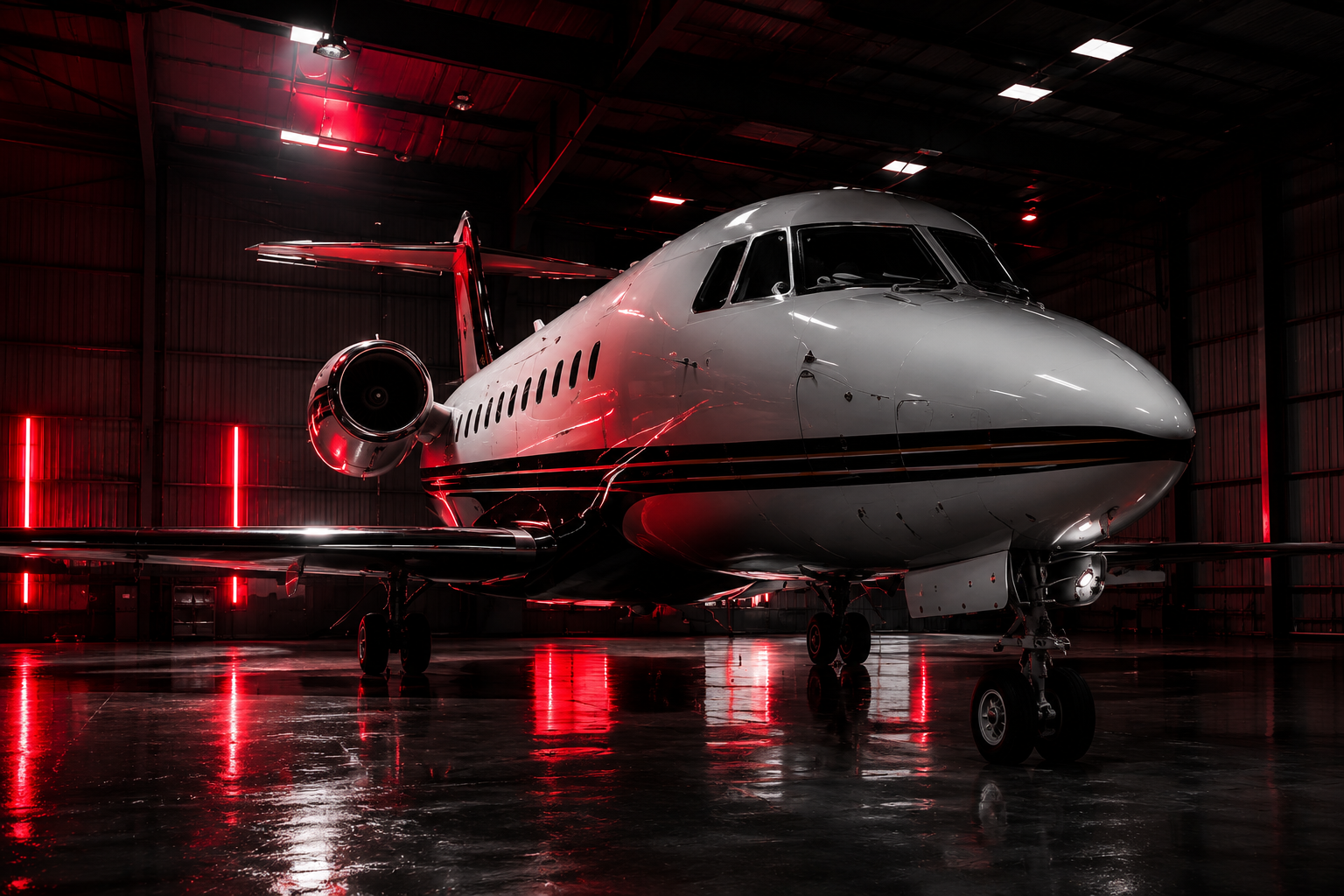
An aircraft isn't a big car. The paint system is different, the windows scratch differently, and there are ports, sensors and bearings that can be damaged by the wrong product or a careless rinse. That's why aircraft detailing is its own trade.
What makes aircraft detailing different from car detailing?
- Different paint. Aircraft are usually finished in hard aviation polyurethane, over rivets, seams and panel joins that trap dirt and polish residue.
- Acrylic windows. Aircraft windows and windscreens are usually acrylic, not glass. Many common cleaners and solvents can craze or haze them.
- Sensitive equipment. Pitot tubes, static ports, angle-of-attack sensors and antennas can't take water pressure or chemicals.
- De-ice boots. The rubber boots on leading edges need their own products and must never be polished or coated.
- Size and height. Wings and T-tails mean working at height, around fragile control surfaces, without leaning on the airframe.
- Different grime. Exhaust soot, oil streaks, bugs on leading edges and hydraulic fluid all need specific treatment.
What cleaning products are safe to use on an aircraft?
Aircraft cleaners are tested against aviation standards, such as Boeing D6-17487 and SAE AMS 1526, to make sure they won't harm aluminium, composites, sealants or paint. Household degreasers, car-wash chemicals and ammonia-based glass cleaners aren't tested this way. On acrylic windows, use a dedicated acrylic cleaner and polish only.
What needs to be masked before washing an aircraft?
- Pitot tubes and static ports
- Angle-of-attack and other external sensors
- Engine intakes and exhausts
- Wheel bearings and brakes (no high-pressure water)
- Vents, drains and antennas
- De-ice boots, when polishing or coating nearby
All masking is removed and checked after the job, so nothing is left in place for the next flight.
Can a regular car detailer work on my aircraft?
Before anyone touches your aircraft, ask them:
- How much aircraft work have you done? Ask for examples on similar types.
- Is your insurance current, and does it cover aircraft? Ask to see the certificate.
- Which products will you use? They should name aviation-tested cleaners and an acrylic-safe window product.
- What will you mask, and how? They should be able to list the ports and sensors on your type.
- How will you reach the high areas? Ladders resting on the airframe aren't the answer.
How often should an aircraft be washed?
For an aircraft flying regularly, a wash every two to four weeks is a good baseline. Bugs on leading edges should come off as soon as possible after a flight, before they harden. After flying near the coast or through salt air, wash sooner. Aircraft kept on the ramp in Brisbane also cop summer storms, humidity and UV, so they need more frequent care than hangared aircraft.
How much does aircraft detailing cost in Brisbane?
Our aircraft packages are priced by aircraft size, from a 2-seat single up to an XL jet:
| Package | What's included | Price range |
|---|---|---|
| Silver Service | Exterior wash and dry, windows polished, tyres dressed | $300–$700 + GST |
| Full In/Out Detail | Interior and exterior detail | $500–$1,200 + GST |
| Detail + 3-Stage Correction | Full detail, decon wash, clay treatment and 3-stage paint correction | $1,500–$10,000 + GST |
| Skygloss Fusion | Clear coat rebuilding system, 5-year warranty | $5,000–$15,000 + GST |
Paint correction and long-term protection on larger aircraft are quoted on the painted surface area. See aircraft detailing or read about aircraft ceramic coating and Skygloss.
Aircraft detailing in Brisbane
We work hangar-side around Brisbane, on private aircraft from light singles to turboprops. Every job starts with an inspection and a clear scope, so you know exactly what's being done before we start. Request a quote.
Common questions
Can you use car wash products on an aircraft?
We don't recommend it. Car products aren't tested against aviation standards and some can harm sealants, acrylic windows or bare metal. Use aircraft-specific cleaners instead.
How often should I wash my aircraft?
Every two to four weeks for an aircraft that flies regularly, with bugs removed from leading edges after each flight. Aircraft kept outdoors or near the coast need more frequent washing.
How much does aircraft detailing cost in Brisbane?
Our aircraft packages range from $300 + GST for a basic exterior wash on a 2-seat single, up to $10,000 + GST for a full detail with 3-stage paint correction on an XL jet. Larger protection jobs are quoted on surface area.
Do you detail aircraft in the hangar?
Yes. We work hangar-side around Brisbane, so the aircraft doesn't need to be moved to a wash bay.
Is ceramic coating safe for aircraft?
Yes, when it's applied to sound, prepared paint and sensitive areas are masked. Windows, de-ice boots and sensors are never coated.